
Forearm tattoos for women are one of the best spots for a first or second tattoo. The skin is firm, the area is easy to care for, and you can show it off or cover it with a sleeve.
Scroll through 60 ideas below, starting with Dagger & Wildflower Bloom and Ornamental Wolf & Peony. Every entry includes a placement tip and a pain rating from 1 to 10.
60 Best Forearm Tattoos for Women
1. Dagger & Wildflower Bloom

Image Credit: Instagram
An ornate dagger runs straight down the forearm, its handle wrapped in delicate scrollwork. Wildflowers and leaves spill out around the blade on both sides. Everything is done in fine, illustrative black lines with tiny hand-drawn florals filling the gaps. It’s soft and sharp at the same time, if that makes sense.
- Why it works: The forearm’s long shape gives the dagger room to run its full length without looking cramped.
- Pain Scale: 5/10—fine-line work over a long stretch adds up, though it’s steady rather than sharp.
2. Ornamental Wolf & Peony
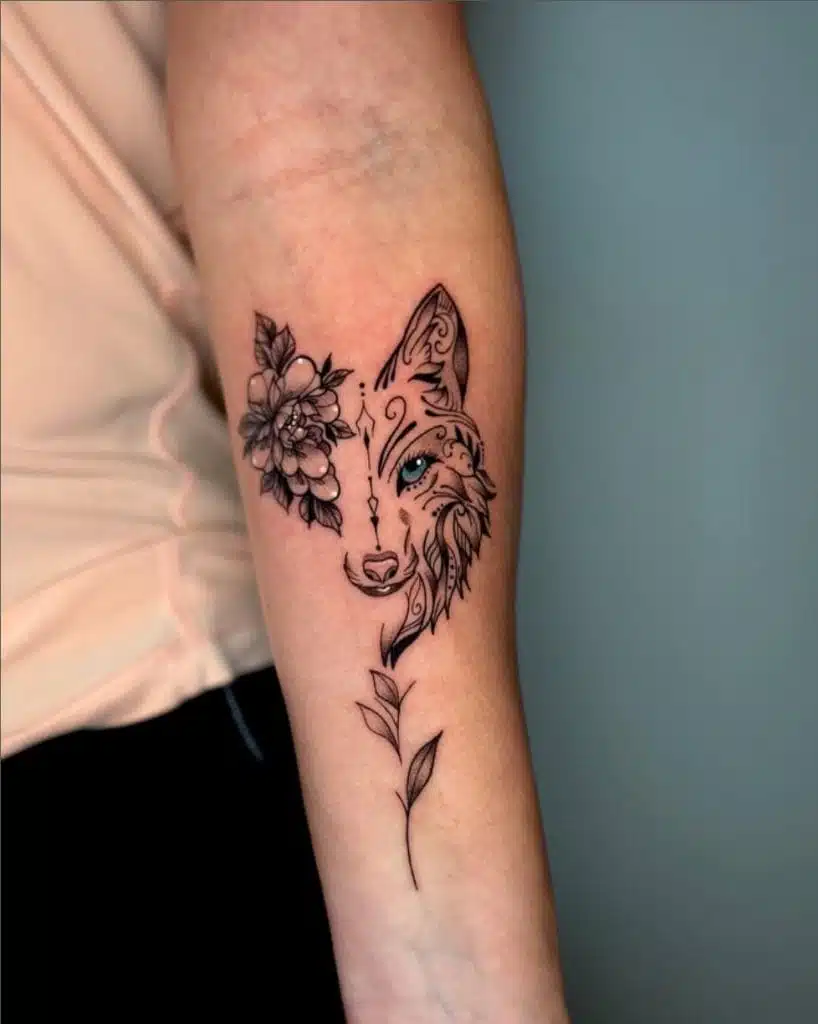
Image Credit: Instagram
Half wolf, half pattern—that’s the best way I can describe this one. Swirling ornamental lines shape the face, with one striking blue eye left uncolored against the black work. A soft peony blooms beside the ear, and a single stem trails down toward the wrist.
- Why it works: The inner forearm’s flat surface lets the symmetrical patterning sit clean and centered.
- Pain Scale: 6/10 — dense linework close to the elbow crease tends to feel a bit more sensitive.
3. Rose Vine Shoulder Cascade

Image Credit: Instagram
This one starts at the shoulder and flows all the way down the inner arm like a vine someone let grow wild. Roses and small blossoms cluster together in soft black and grey shading. It reads almost like lace draped over the skin.
- Why it works: The natural bend of the elbow lets the vine curve instead of running in a stiff straight line.
- Pain Scale: 6/10—the inner elbow area is more sensitive, so expect a bit more discomfort there.
4. Lily & Rose Bouquet

Image Credit: Instagram
A full bouquet sits stacked on the inner forearm—lilies, a rose, and a small butterfly fluttering between the petals. The shading is soft and cloud-like, almost like the flowers are glowing from within. Every petal has that gentle, hand-painted feel to it.
- Why it works: The forearm’s flat inner panel gives the bouquet a clean, contained frame to bloom in.
- Pain Scale: 5/10—shaded florals feel more like pressure than sharp pain here.
5. Sunflower & Fan Sleeve Story

Image Credit: Instagram
This one tells a whole story down the arm—a bird mid-flight, a big sunflower, then a delicate folding fan with a touch of orange ink. Thin black bands separate each section like little chapters. It’s the kind of piece you keep discovering new details in.
- Why it works: Breaking the sleeve into banded sections lets each design breathe on its own along the forearm’s length.
- Pain Scale: 7/10—full sleeve coverage with dense detail means longer sessions and more overall sensitivity.
6. Wildflower Meadow Sleeve

Image Credit: Instagram
A whole little meadow grows down this forearm—tall stems, wild blossoms, and soft grey shading throughout. It reads almost like a botanical illustration pulled from an old field guide. My favorite part is how it tapers naturally toward the wrist.
- Why it works: The forearm’s straight run lets tall stems stretch upward the way they would in real life.
- Pain Scale: 6/10—larger shaded areas near the wrist can feel a touch more tender.
7. Rose & Lily Trailing Vine

Image Credit: Instagram
Big, bold roses and lilies trail from the elbow all the way onto the hand. The blooms get smaller as they move down, almost like the vine is running out of breath by the wrist. Bold black shading gives it real depth and drama.
- Why it works: The gradual size taper follows the natural narrowing of the arm toward the hand.
- Pain Scale: 7/10—moving onto the hand means thinner skin and closer bone, so it stings more there.
8. Vintage Locket Floral Frame

Image Credit: Instagram
A vintage oval frame sits on the forearm like an old locket, heavy black filling the background behind pale magnolia blooms. Swirling filigree spills out from one edge, almost like the frame is unraveling. It has this antique, storybook feel to it.
- Why it works: Solid black fill against soft florals creates contrast that really pops on the forearm’s flat surface.
- Pain Scale: 7/10—heavy black saturation takes more passes, so it builds up more discomfort.
9. Geometric Mandala Bloom Sleeve

Image Credit: Instagram
Sharp geometric patterns meet soft dotwork florals in this full-sleeve piece. A detailed mandala blooms near the underarm while diamond shapes climb toward the shoulder. It’s structured and organic all at once, which I find really striking.
- Why it works: The forearm and upper arm together give enough space for both the geometry and the mandala to stand out clearly.
- Pain Scale: 8/10—dotwork mandalas near the underarm hit thin skin with lots of nerve endings.
10. Lily Cluster with Peony Accent

Image Credit: Instagram
Layered lilies open up across the forearm, with a soft peony bud tucked at the bottom corner. Fine stippling gives each petal gentle texture without heavy black shading. It feels light and airy, like the flowers just landed there.
- Why it works: The outer forearm’s flatter surface keeps the layered petals from distorting with arm movement.
- Pain Scale: 4/10—fine stippling on the outer arm is one of the gentler options on this list.
11. Serpent & Peony Coil

Image Credit: Instagram
A slender snake winds its way down the arm, weaving between clusters of full peony blooms. The linework is soft and detailed, with the snake’s scales drawn one by one. It feels more elegant than eerie once you see the whole piece together.
- Why it works: The snake’s natural coil follows the forearm’s shape, so it reads as one continuous flowing line.
- Pain Scale: 6/10—the inner arm stretch has thinner skin, so detailed scale work is felt more here.
12. Daffodil Trio Outline

Image Credit: Instagram
Three daffodils bloom in a clean, bold outline down the forearm, with long grassy leaves sweeping beneath them. There’s no shading here, just confident linework that lets the flower shape speak for itself. It has a breezy, springtime feel.
- Why it works: Bold outline styles hold up well over the long term on the forearm, since the lines stay crisp for years.
- Pain Scale: 4/10—thicker outline strokes are steady and quick, easier to sit through than fine detail work.
13. Peony Shoulder Cap

Image Credit: Instagram
A single peony sits front and center here, surrounded by smaller blossoms and delicate sprigs scattered above it. The fine lines and light shading give it a hand-sketched quality. It’s the kind of piece that peeks out from a tank top just right.
- Why it works: Placed higher on the arm, this cluster stays visible in short sleeves without needing the full forearm.
- Pain Scale: 4/10—the upper arm has more muscle padding, so it’s one of the easier spots.
14. Golden Sunflower Bloom

Image Credit: Instagram
A big, detailed sunflower wraps around the upper forearm, joined by a rose and trailing leaves that spill down toward the wrist. Every petal has its own texture, giving it a really lifelike feel. My favorite detail is how the leaves thin out as they reach lower on the arm.
- Why it works: The wraparound placement uses the natural curve of the arm to make the sunflower look like it’s actually turning toward the light.
- Pain Scale: 6/10—larger, denser florals take longer sessions, which adds to overall soreness.
15. Thistle & Wildflower Drape

Image Credit: Instagram
Thistles and small wildflowers drape diagonally across the forearm, thinning into a single trailing vine near the wrist. The fine lines feel almost sketch-like, with just a touch of shading in the petals. It’s understated but still has real presence.
- Why it works: The diagonal layout follows the arm’s natural line instead of fighting against it.
- Pain Scale: 4/10—fine linework on the outer forearm tends to be one of the milder options.
16. Moonlit Peony Mandala

Image Credit: Instagram
A crescent moon curls around a soft peony bloom at the top, with a dotwork mandala unfolding beneath it. Tiny dangling charms trail down like jewelry, each one dotted in fine stippling. It’s dreamy and detailed without feeling too busy.
- Why it works: The dangling chandelier motif follows gravity naturally down the forearm, so it never looks forced.
- Pain Scale: 5/10—dotwork mandalas are steady and rhythmic, more of a buzzing ache than sharp pain.
17. Anatomical Heart & Floral Sleeve

Image Credit: Instagram
This full sleeve starts with blossoms at the shoulder, wraps a thin double band around the upper arm, then flows into a floral cluster and a detailed anatomical heart lower down. Vines connect each section like one continuous thought. The heart detail caught me off guard—it’s beautifully done.
- Why it works: The banding breaks the sleeve into chapters, so each section still reads clearly on its own.
- Pain Scale: 7/10—full sleeves covering shoulder to forearm mean long sessions and cumulative soreness.
18. Cascading Petal Waterfall

Image Credit: Instagram
Oversized petals cascade down the entire forearm, getting smaller as they near the wrist, finishing in a delicate lace-like point with tiny dangling dots. The scale of the flowers here is bold, but the fine detail keeps it feeling soft. It really does look like petals falling in slow motion.
- Why it works: The size taper mirrors how the forearm naturally narrows toward the wrist, keeping proportions realistic.
- Pain Scale: 6/10—the wrist-adjacent detailing stings more due to thinner skin and closer bone.
19. Bold Blackwork Peony Cluster

Image Credit: Instagram
Deep, saturated blackwork shapes these peonies, with pale negative space left for petal highlights. The contrast is dramatic—almost a graphic novel in style. This one’s for someone who wants their tattoo seen from across the room.
- Why it works: Heavy black fill against skin tone creates striking contrast that reads clearly even at a distance.
- Pain Scale: 8/10—solid black saturation over a large area means more passes and more overall discomfort.
20. Fine-Line Peony Shoulder Drop

Image Credit: Instagram
Delicate peonies cluster at the shoulder and trail down the upper arm in loose, scattered blooms. The linework stays fine throughout, with barely-there shading to keep it airy. It has a soft, almost watercolor feel even though it’s done in pure line art.
- Why it works: Placing the heaviest bloom cluster at the shoulder draws the eye upward, balancing the arm visually.
- Pain Scale: 4/10—the upper arm and shoulder area is padded and generally easier to sit through.
21. Double Rose Wrist Bloom

Image Credit: Instagram
Two full roses sit stacked right at the wrist, spilling onto the back of the hand with layered leaves. The shading is deep and dramatic, giving each petal real dimension. This placement makes a statement every time you move your hand.
- Why it works: The wrist’s rounded shape lets the roses wrap naturally without distorting when you bend it.
- Pain Scale: 8/10—wrist and hand skin sits close to bone with dense nerve endings, so this one’s tender.
22. Regal Lion & Mandala Crown

Image Credit: Instagram
A lion’s face looks straight out from the upper arm, its mane blending into an ornamental mandala crown above. Peonies bloom on either side, softening all that boldness. It’s fierce and pretty at the same time, which I love.
- Why it works: The upper arm’s broad, flat area gives enough room for the lion’s detail to stay sharp and readable.
- Pain Scale: 6/10—the shoulder cap area has decent padding, though dense shading adds up over a longer session.
23. Tiny Cherry Blossom Branch

Image Credit: Instagram
A slim cherry blossom branch runs vertically on the inner wrist, each bloom tinted in soft pastel pink with tiny green leaves. Scattered petals drift off to the side like they’re falling in the wind. It’s small, but it says so much.
- Why it works: The narrow, delicate design suits the tighter space near the wrist without feeling crowded.
- Pain Scale: 6/10—inner wrist skin is thin and close to tendons, so small details there still sting a bit.
24. Botanical Peony & Star Bloom

Image Credit: Instagram
Peonies bloom at the shoulder, connected by trailing leaves to little star-shaped flowers scattered down the arm. Tiny dot clusters and sparkle marks fill the empty spaces between blooms. It has a soft, celestial touch without feeling overdone.
- Why it works: Scattering the smaller star blooms keeps the design light instead of one heavy solid cluster.
- Pain Scale: 5/10—spaced-out fine-line elements are gentler than dense continuous coverage.
25. Wildflower & Berry Foraging Trail

Image Credit: Instagram
This one reads like a pressed botanical page—daffodils, blueberries, and a little bee, all growing along one long branch down the arm. Every leaf and berry has fine, careful detail. It’s the most nature-lover design on this whole list.
- Why it works: The single continuous branch mirrors the natural line of the arm from shoulder to wrist.
- Pain Scale: 6/10—full-arm coverage with detailed botanical work means longer time under the needle.
26. Banded Peony Vine Wrap

Image Credit: Instagram
A single peony sits at the top of the forearm, its vine trailing down through two thin black bands before continuing toward the wrist. The fine lines keep everything delicate and airy. The bands give it a nice, structured pause in the design.
- Why it works: The double band breaks up the vine visually, making the piece feel intentional rather than just a random trail.
- Pain Scale: 4/10—fine-line vine work on the outer forearm is one of the more comfortable choices here.
27. Poppy & Wheat Meadow Cluster

Image Credit: Instagram
A big poppy anchors this piece, surrounded by wheat stalks, tiny berries, a butterfly, and a little bee tucked into the corner. It feels like a whole tiny ecosystem living on one arm. Every element has its own personality.
- Why it works: Mixing flower, insect, and grain elements adds visual variety without needing bold color to stand out.
- Pain Scale: 5/10—fine detail spread across a wider area keeps the sensation manageable in most spots.
28. Lotus Cuff with Hidden Petals

Image Credit: Instagram
A lotus flower opens fully at the top of this design, its petals wrapping around a thin negative-space band before more leaves continue underneath. It plays with the idea of a cuff bracelet, but drawn in botanical detail. Genuinely one of the more clever placements I’ve seen.
- Why it works: The negative-space band creates a natural break, making the tattoo look like two connected pieces rather than one long stretch.
- Pain Scale: 6/10—the wraparound shading near the wrist side adds a bit more sting.
29. Symmetrical Floral Sleeve Duo

Image Credit: Instagram
This one’s actually two matching sleeves, one on each arm, both filled with peonies, lilies, and soft trailing leaves. The fine linework stays consistent across both sides, creating a mirrored effect. It’s a big commitment, but the symmetry is stunning.
- Why it works: Matching sleeves on both arms create balance that a single-arm piece just can’t replicate.
- Pain Scale: 6/10—expect this twice over, so total sitting time and overall fatigue add up.
30. Peony Cascade with Hidden Words

Image Credit: Instagram
Two large peonies bloom at the shoulder, cascading down into smaller blooms near the elbow, with a small line of script tucked between the petals. The lettering is subtle and easy to miss unless you look closely. I love finding little details like this hidden inside bigger pieces.
- Why it works: Tucking the script inside the floral cascade keeps the meaning personal without dominating the design.
- Pain Scale: 5/10—upper arm padding keeps most of this comfortable, with only the elbow taper feeling sharper.
31. Cyber-Sigilism Split Portrait

Image Credit: Instagram
This one’s unlike anything else on the list—a fractured portrait blended with geometric shapes, tiny symbols, and scattered dot clusters. A single leaf sprig trails down toward the elbow like it wandered in from a different world entirely. It’s bold, strange, and kind of mesmerizing.
- Why it works: The fragmented layout suits the upper arm’s broader canvas, giving each symbol space to stand out.
- Pain Scale: 6/10—mixed line weights and shading across a wide area add up over a longer sitting.
32. Peony & Dragonfly Forearm Story

Image Credit: Instagram
Layered peonies bloom at the elbow, and a delicate dragonfly hovers mid-flight as the design moves down toward the hand. The fine linework has a sketchy, almost hand-drawn quality throughout. I love how the dragonfly adds movement to what could’ve just been another floral piece.
- Why it works: The dragonfly’s placement mid-arm gives the eye a natural resting point between the two flower clusters.
- Pain Scale: 6/10—the piece extends onto the hand, where skin is thinner and more sensitive.
33. Watercolor Peony Elbow Wrap

Soft pink and magenta peonies bloom right over the elbow, painted in loose watercolor washes rather than sharp outlines. Green leaves drip down in soft gradients, almost like actual watercolor paint on skin. This one feels like it belongs in an art gallery.
- Why it works: Watercolor’s soft blending hides the natural creases of the elbow instead of fighting against them.
- Pain Scale: 7/10—the elbow itself is bony and sensitive, so wrapping color works around it stings more.
34. Cherry Blossom Ink Wash Branch

Image Credit: Instagram
A gnarled branch painted in bold black ink wash runs the length of the forearm, dotted with bright red cherry blossoms. It has that loose, brushstroke feel, like it was painted rather than tattooed. My favorite part is how uneven and organic the branch looks.
- Why it works: The brush-stroke style suits the forearm’s long straight line, letting the branch run naturally top to bottom.
- Pain Scale: 5/10—bold ink wash sections go in fast, though red ink can sting slightly more than black.
35. Tropical Lily & Monstera Band

Image Credit: Instagram
A sunflower and tropical leaves fill the top half, separated by a bold black band from a cluster of lilies and a monstera leaf below. It’s got a warm, vacation kind of energy to it. This design makes me want to book a trip somewhere green.
- Why it works: The thick band creates a clear visual break, letting two different botanical themes coexist without clashing.
- Pain Scale: 6/10—solid black banding takes more passes than line work alone, adding to the discomfort.
36. Raven Among Cherry Blossoms

Image Credit: Instagram
A detailed raven perches mid-forearm, its feathers rendered in careful micro-realism, surrounded by cherry blossoms above and full roses below. The contrast between the dark bird and soft pale flowers is striking. This is one of the moodier designs here, in the best way.
- Why it works: The raven’s dark, dense shading anchors the piece visually while the lighter florals keep it from feeling too heavy.
- Pain Scale: 7/10—dense feather shading across a large area means a longer, more tiring session.
37. Gothic Cathedral Peony Sleeve

Image Credit: Instagram
Gothic cathedral arches sit at the shoulder, flowing into full peonies, a detailed motif, and ornamental patterning down toward the wrist. Everything is done in solid, confident blackwork with almost no negative space left bare. It’s dramatic in the best possible way.
- Why it works: The architectural elements at the top anchor the sleeve, giving the florals below a clear sense of direction.
- Pain Scale: 8/10—dense blackwork across a full sleeve is one of the more demanding sites on this list.
38. Banded Peony & Daisy Cuff

Image Credit: Instagram
Two floral clusters—one peony-heavy, one daisy-heavy—sit separated by clean negative-space bands running across the forearm. The fine detail in each petal is remarkably consistent throughout. It reads almost like a matching set of bracelets made of flowers.
- Why it works: The negative-space bands give the eye a clear resting point between each floral section.
- Pain Scale: 5/10—fine detail with breaks in between keeps this more comfortable than continuous coverage.
39. Butterfly Veil Portrait

Image Credit: Instagram
A woman’s face rests at the center, half hidden behind a large butterfly resting over her eyes, roses blooming above her head. It’s soft, almost dreamlike, with gentle shading throughout. Something about the hidden eyes gives it a quiet, mysterious feel.
- Why it works: Placing the face mid-forearm keeps it visible and central without needing the whole arm covered.
- Pain Scale: 6/10—detailed portrait shading takes patience, especially around the finer facial features.
40. Mandala Chandelier Drop

Image Credit: Instagram
A detailed ornamental mandala fills the length of the forearm, made entirely of fine lines and tiny dots with no shading at all. A delicate chandelier drip trails down near the wrist, ending in a single sharp point. It’s intricate without ever feeling heavy on the skin.
- Why it works: Fine dotwork mandalas suit the forearm’s flat plane, keeping every symmetrical detail crisp and readable.
- Pain Scale: 5/10—dotwork has a repetitive, buzzing feel rather than sharp pain, so most people find it manageable.
41. Deer & Chrysanthemum Forest Bloom

Image Credit: Instagram
A gentle deer peeks out through a wreath of blossoms and antler-framed leaves, with a full chrysanthemum blooming near the wrist. The fine detail on the deer’s face feels almost tender, like it’s watching quietly. This is one of those designs that tells a story without saying a word.
- Why it works: The deer’s calm expression pairs naturally with the soft floral framing, keeping the whole piece gentle rather than busy.
- Pain Scale: 5/10—fine detail on the inner forearm is manageable, though the wrist-adjacent bloom stings slightly more.
42. AI-Realism Geisha Cityscape

Image Credit: Instagram
A striking portrait dominates the top of this sleeve, blended with a beetle resting over one brow and cherry blossoms cascading down. Behind her, a soft pagoda skyline fades into the background like a memory. This one looks like a painting brought to life on skin.
- Why it works: The portrait’s placement at the widest part of the forearm gives the fine facial shading enough room to stay sharp.
- Pain Scale: 7/10—photorealistic detail work of this scale means multiple long sessions and real commitment.
43. Layered Peony Vine Sleeve

Image Credit: Instagram
Full peonies stack one after another from shoulder to wrist, connected by a continuous vine of leaves. The fine linework stays remarkably consistent across the whole length. It’s one of the most seamless full-arm florals I’ve come across.
- Why it works: A single continuous vine ties the whole sleeve together, so it never feels like separate disconnected pieces.
- Pain Scale: 7/10—full sleeve length means multiple sessions and cumulative soreness by the end.
44. Delicate Peony Trail

Image Credit: Instagram
Barely-there fine lines trace a small peony cluster on the back of the upper arm, with no shading at all—just pure delicate outline. It has an almost invisible-ink quality, soft and quiet. This design is perfect for someone who wants something understated but still floral.
- Why it works: The lack of shading keeps this piece lightweight, ideal for someone easing into their first tattoo.
- Pain Scale: 3/10—minimal fine-line outline work with no shading is one of the gentlest options here.
45. Geometric Peony Diamond Frame

Image Credit: Instagram
A soft peony sits centered inside a sharp triangle outline, with a dotted circle wrapping around one side. The mix of organic petals against clean geometric shapes creates a nice tension. It’s structured but still feels romantic, somehow.
- Why it works: The geometric frame gives the eye a clear boundary, making the floral center feel intentional rather than scattered.
- Pain Scale: 4/10—fine geometric lines paired with a single bloom keep this a relatively easy sit.
46. Rising Phoenix Shoulder Sleeve

Image Credit: Instagram
A phoenix spreads its wings wide across the upper arm, its feathers rendered in fine, detailed linework, with a peony blooming just above its head. The whole piece has real movement, as if the bird is mid-flight. It’s one of the most dramatic pieces on this list.
- Why it works: The shoulder’s broad surface gives the phoenix’s wingspan enough room to really stretch out.
- Pain Scale: 6/10—the shoulder area handles detail well, though longer feather work adds to session length.
47. Butterfly & Wildflower Companion

Image Credit: Instagram
A single butterfly rests beside a cluster of peonies and small wildflowers, all done in soft, fine lines with light shading. It feels playful without being cluttered, each element given its own little space to breathe. My favorite detail is how the butterfly seems to be resting mid-flight.
- Why it works: Spacing the butterfly apart from the floral cluster keeps the composition balanced instead of top-heavy.
- Pain Scale: 5/10—fine linework with moderate shading sits comfortably for most people.
48. Wildflower Horse Portrait

Image Credit: Instagram
A horse’s face looks gently to the side, its mane flowing into a cascade of peonies and small blossoms below. The dotwork shading on the horse gives it real depth without feeling heavy. There’s something so peaceful about this one.
- Why it works: The horse’s flowing mane transitions naturally into the floral trail, keeping the whole design connected.
- Pain Scale: 5/10—moderate dotwork shading on the outer forearm is fairly manageable for most people.
49. Sunflower & Lily Butterfly Cluster

Image Credit: Instagram
A butterfly lands at the top of this piece, leading down into layered lilies and a bold sunflower near the wrist. The fine lines throughout keep every petal crisp and well-defined. It is cheerful and detailed, the kind of tattoo that makes you smile when you look at it.
- Why it works: Ending with the sunflower near the wrist creates a strong focal point right where the eye naturally lands.
- Pain Scale: 5/10—fine-line florals on the outer forearm are gentle, with slightly more sensitivity near the wrist.
50. Warm Peony Hand & Wrist Bloom

Image Credit: Instagram
Soft peach and warm-toned peonies flow from the forearm right onto the back of the hand, with tiny finger tattoos completing the look. The color palette is gentle, more blush than bold. This is the most delicate, romantic piece on the whole list.
- Why it works: Extending onto the hand and fingers turns this into a complete, cohesive statement rather than just an arm piece.
- Pain Scale: 8/10—hand and finger placement means thin skin, close to bone, and one of the more painful spots to sit through.
51. Banded Rose Elbow Cascade

Image Credit: Instagram
A thin black band splits the arm—soft leaves sit above, while two full roses cascade below near the elbow. The shading has a gentle gradient feel, not too heavy anywhere. I really like how the band acts almost like a bracelet holding the whole design together.
- Why it works: The band creates a natural pause point right at the narrowest part of the forearm.
- Pain Scale: 6/10—the elbow-adjacent rose cluster is more sensitive than the leafy section above it.
52. Wildflower Bouquet Trail

Image Credit: Instagram
A loose little bouquet climbs up the forearm—daffodils, small blossoms, and thin grassy leaves all bundled together. The linework is fine and unshaded, giving it a botanical sketchbook feel. It looks like someone tied real flowers and pressed them right onto the skin.
- Why it works: The bouquet’s upright growth mirrors how the forearm naturally sits when your arm hangs relaxed.
- Pain Scale: 4/10—light fine-line work without shading is one of the easier options on the list.
53. Sunburst Peony Cluster

Image Credit: Instagram
Two peonies bloom mid-forearm with a tiny sunburst and crescent moon tucked above them, plus a small “ziel” script nearby. It’s got a personal, meaningful touch without being overdone. My favorite detail is how the celestial bits feel like an afterthought that actually completes the piece.
- Why it works: Small celestial accents fill space without competing with the floral focal point.
- Pain Scale: 4/10—fine lines on the outer forearm keep this comfortable for most.
54. Colorful Lily & Sunflower Cascade

Image Credit: Instagram
Bright pink butterflies flutter above a full cascade of lilies and a bold sunflower near the wrist, all done in warm color. It’s easily one of the more vibrant designs here, and it really pops against the skin. This one’s for someone who wants their tattoo loud and joyful.
- Why it works: Color work on this scale draws the eye down the whole arm, making the piece feel like one connected story.
- Pain Scale: 7/10—color saturation over a long stretch takes extra passes, adding to the overall soreness.
55. Leopard Portrait & Frangipani Frame

Image Credit: Instagram
A leopard’s face looks straight ahead, rendered in tight micro-realism, framed above and below by open frangipani blossoms. The contrast between the fur texture and clean flower outlines is really striking. This feels fierce without losing any of its femininity.
- Why it works: The leopard’s central placement on the upper arm gives its detailed shading enough uninterrupted space.
- Pain Scale: 6/10—dense realism shading takes longer, though the upper arm’s padding helps offset some discomfort.
56. Lily Wrist Fan

Image Credit: Instagram
A single bold lily fans out right at the wrist, its petals rendered in confident black linework with leaves trailing up the arm. It’s compact but still makes a real statement. This is the kind of design that looks just as good as a solo piece as it would leading into a bigger sleeve.
- Why it works: The fan shape follows the natural curve of the wrist, so it wraps rather than sitting flat.
- Pain Scale: 7/10—wrist placement means thinner skin and more nerve endings, so it stings more here.
57. Layered Wildflower Cuff Duo

Image Credit: Instagram
Two small floral clusters sit stacked, separated by a thin negative-space band running horizontally across the arm. Each cluster has its own little feather tucked in among the petals. It’s understated, symmetrical, and really well balanced.
- Why it works: The repeated cluster-and-band pattern creates rhythm, so the eye moves naturally down the arm.
- Pain Scale: 4/10—fine detail with breaks in between keeps this comfortable throughout.
58. Full Bloom Rose & Lily Sleeve

Image Credit: Instagram
Big roses and open lilies stack from the elbow all the way down onto the wrist, with fine detail woven throughout every petal. The composition feels full but never cluttered, each flower given just enough space. This is one of the most complete-looking pieces on the whole list.
- Why it works: The size and density taper gently toward the wrist, keeping the proportions natural.
- Pain Scale: 6/10—the length and detail mean a longer sit, especially as it nears the wrist.
59. Mandala Peony Full Sleeve

A large peony blooms at the shoulder, flowing into dense geometric mandala patterning that fills the rest of the sleeve in solid blackwork. It’s heavy, bold, and incredibly detailed from top to bottom. This one takes real commitment, but the payoff is stunning.
- Why it works: The peony at the top softens the geometric intensity below, keeping the whole sleeve visually balanced.
- Pain Scale: 8/10—full sleeve blackwork with dense mandala patterning is one of the longest, most demanding pieces here.
60. Rose & Daisy Butterfly Trail

Image Credit: Instagram
A big rose sits mid-forearm with two butterflies resting nearby, one landing right on a small daisy below. Fine leaves trail down toward the wrist, tying the whole piece together. It’s soft, balanced, and genuinely one of my favorite closers for this list.
- Why it works: Placing the butterflies at different heights creates visual movement down the entire forearm.
- Pain Scale: 5/10—moderate shading spread across the arm keeps this manageable for most people.
Related Reading: Looking for more ideas? Browse our arm tattoos for women.
Why Forearm Placement Is So Popular Among Women
Forearms are forgiving. You can show them off or cover them up in seconds.
That flexibility matters. A tattoo you can hide for a job interview but flash on the weekend? That’s freedom.
My favorite part is how the forearm curves. It gives artists a natural canvas for flowing lines and movement. Nothing feels flat or forced here.
Plus, you get to watch it heal every single day. There’s something comforting about that daily glance.
Tattoo Placement & Pain Scale
Curious how this spot compares to others? Check our tattoo pain chart.
Let’s talk pain, because I know it’s on your mind.
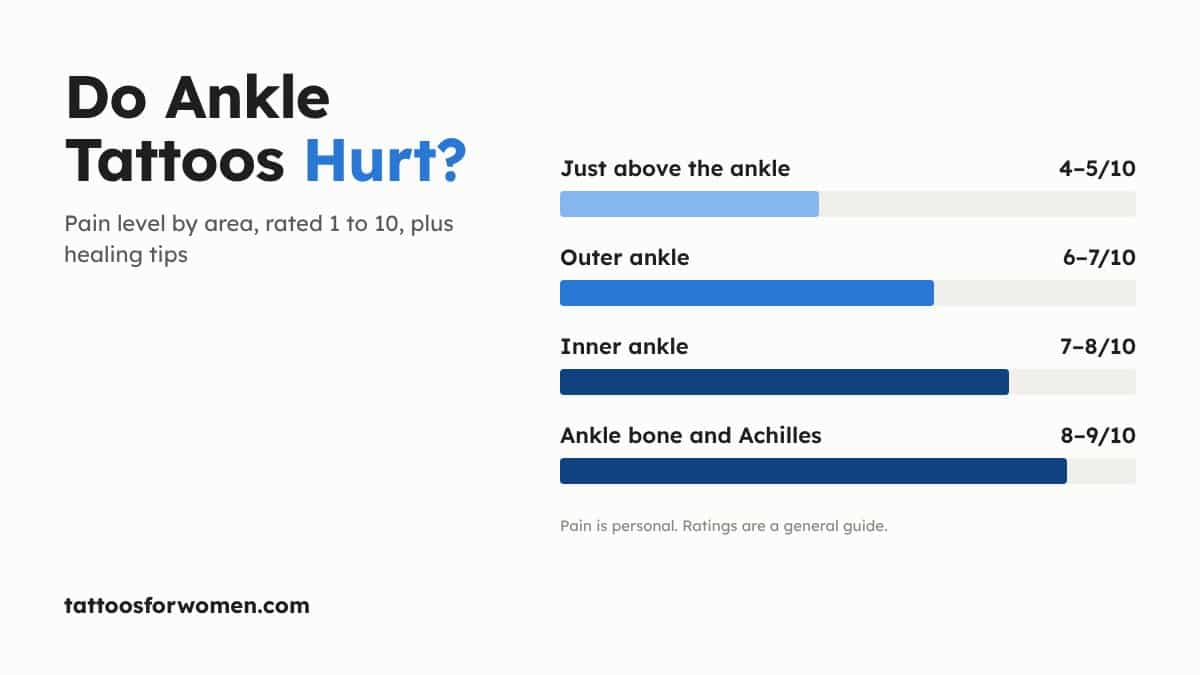
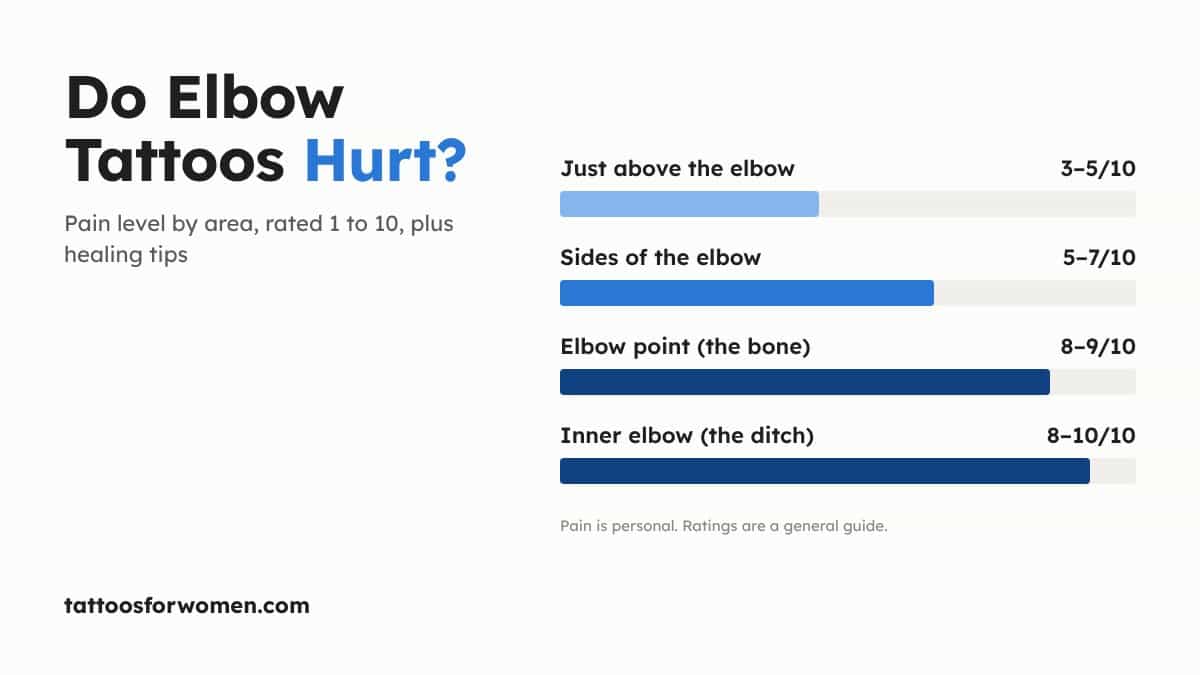
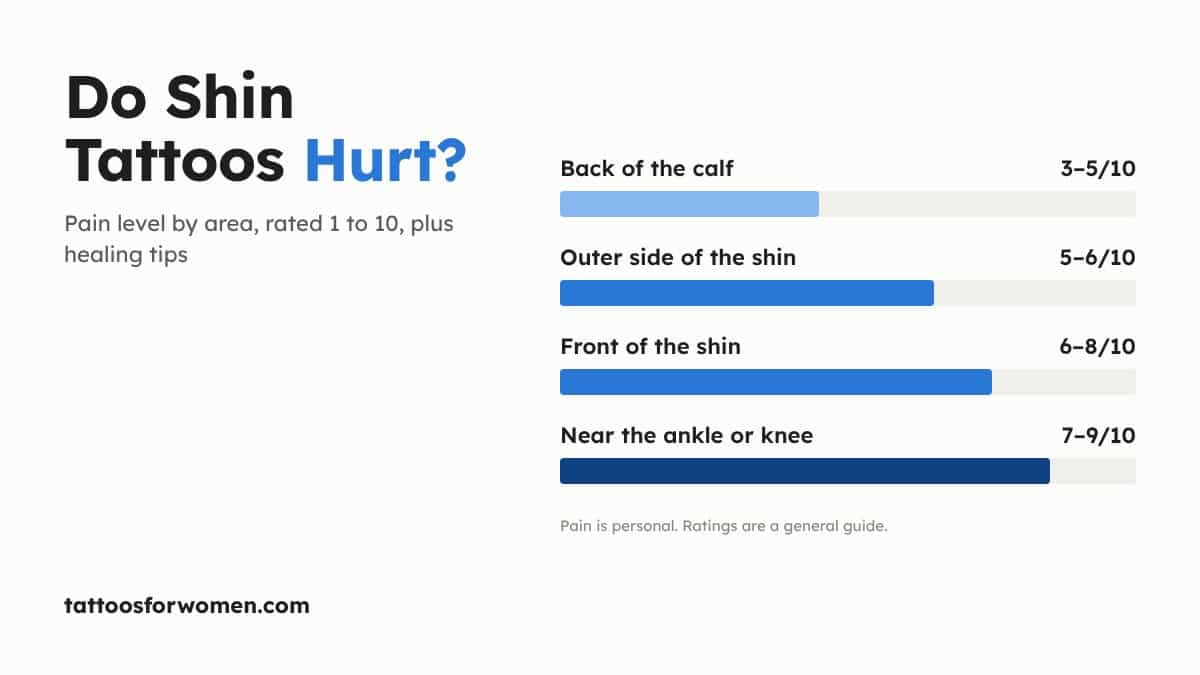
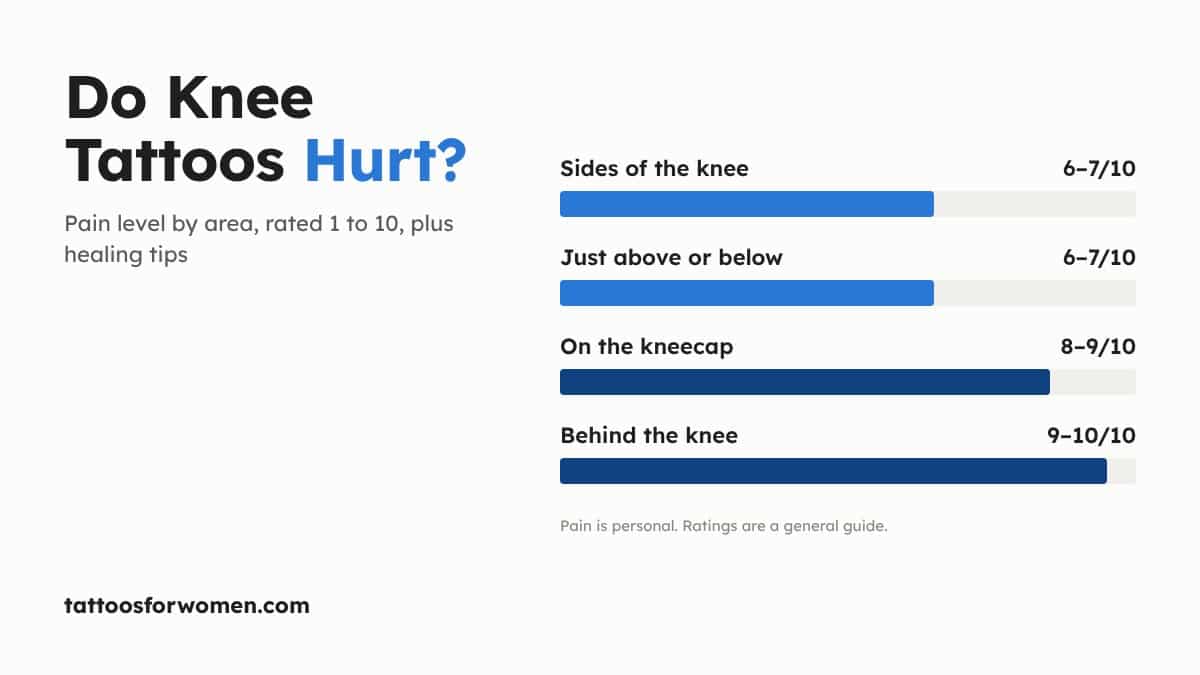
The forearm generally sits around 3 to 5 on a 10-point scale. That’s mild to moderate for most people.
Here’s the truth: pain isn’t really about size. It’s about skin thickness, nerve density, and how close you are to bone.
The inner forearm has thinner skin and more nerve endings, so it stings a bit more. The outer forearm, closer to muscle, tends to feel duller and more manageable.
If you’re nervous, start with the outer arm. You can always add more later.
Tattoo Aftercare Tips
Fresh ink needs real care, not guesswork.
- Keep the bandage on for the time your artist tells you, usually a few hours.
- Wash gently with fragrance-free soap and lukewarm water.
- Pat dry, never rub. Your skin is still healing underneath.
- Apply a thin layer of fragrance-free healing ointment or lotion.
- Avoid direct sun, pools, and soaking baths for at least two weeks.
- Don’t pick at scabs, even if they itch like crazy.
- Wear loose, breathable clothing over the area while it heals.
For more science-backed healing tips, Healthline has a solid breakdown of the healing timeline.
FAQ
How long do forearm tattoos take to heal?
Most forearm tattoos heal on the surface within two to three weeks, though full healing underneath can take up to six weeks. Everyone’s skin responds a little differently, so patience really matters here.
Do forearm tattoos fade faster than other placements?
Not really. Forearms get regular sun exposure, so using sunscreen once healed helps keep colors and lines sharp for years. According to Wikipedia, tattoo longevity depends heavily on ink depth and aftercare, not just placement.
Can I hide a forearm tattoo for work?
Yes, it’s one of the easiest spots to cover. A long sleeve or even a wide compression sleeve does the job without anyone noticing.
If this style speaks to you, take a look at our half sleeve tattoo ideas and shoulder tattoo designs too, and don’t miss these inner arm tattoos.
Final Thought
If you made it all the way here, thank you for sticking with me.
Picking a tattoo is personal, and it should feel like it’s really yours, not just something trending.
Whatever you choose, I hope it makes you smile every single time you catch it in the mirror.